
Lightning protection,
grounded in South Texas.
When the sky lights up over the coastal plain, the difference between a near-miss and a burned-out building is a path to ground. SCI designs and installs lightning protection for homes, businesses, and the oilfield — intercept, conduct, dissipate.
South Texas gets hit — a lot.
The Gulf Coast is one of the most lightning-active regions in the country. Flat, open ground and tall isolated structures — barns, shops, tank batteries, light plants — are exactly what a strike looks for. One hit can start a fire, destroy a panel, and take out every controller, pump, and appliance tied to it.
A lightning protection system changes the odds. It doesn't invite the strike and it doesn't repel it — it gives that enormous current a planned, low-resistance route around the things you care about and straight into the earth. Done right, it's invisible until the day it saves you.
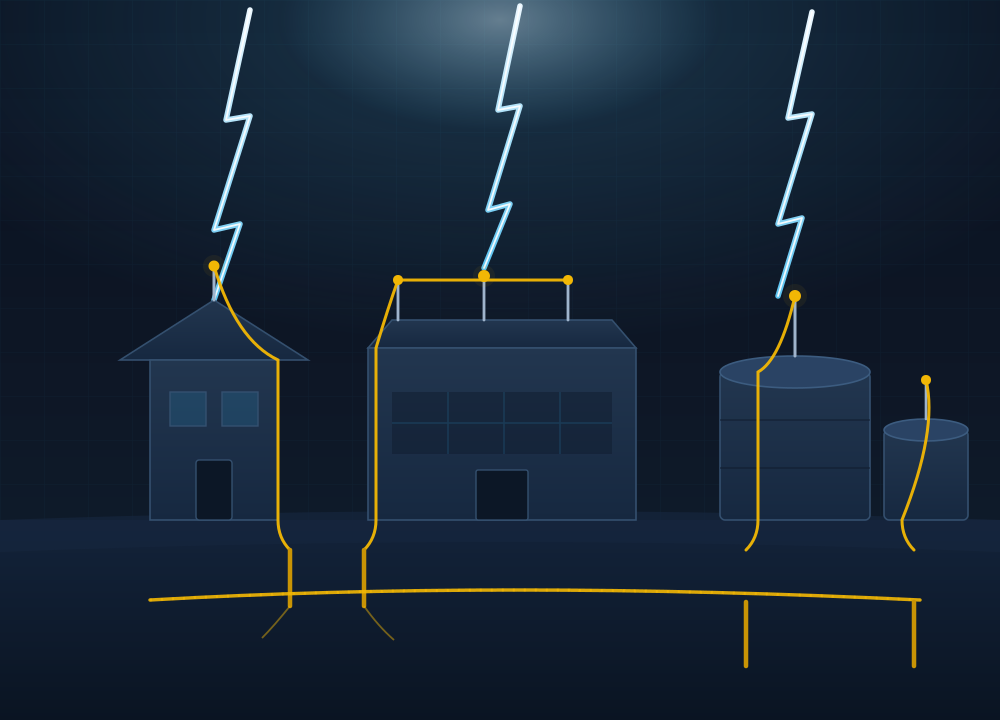
What are you protecting?
Same physics, different building. Pick the one that fits and see exactly how SCI builds it.
Homes
Roof air terminals, hidden down conductors, ground rods, and whole-home surge protection — sized for houses, ranch homes, and outbuildings.
Home lightning protection →Businesses
Perimeter terminals, roof conductor loops, multiple downs, and panel surge protection for shops, offices, ag facilities, and grain handling.
Business lightning protection → Our specialtyOilfield
Bonded, well-grounded protection for tank batteries, separators, and lease equipment — built around flammable vapors and remote sites.
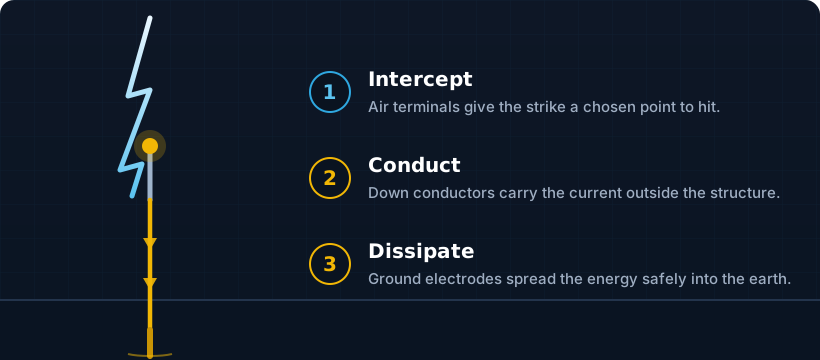
Oilfield lightning protection →Three jobs, one bonded system.
A lightning protection system isn't a single rod — it's a path. Every piece is bonded to the next so the current never has a reason to jump into your structure.
Done right, and documented.
Lightning protection is governed by national standards — NFPA 780 for design and UL 96A for installation. SCI builds to those standards using listed components, bonds everything to a common ground, and gives you the documentation your insurer or inspector may ask for.
- Licensed Texas electrical contractor — TDLR EC #26584
- Listed air terminals, conductors & connectors
- Whole-system bonding & dedicated grounding
- Surge protection coordinated at the panel
- Documentation for insurance & inspection
- 24-hour response for strike damage
Lightning protection, answered.
Do lightning rods actually work?
Yes — a properly engineered lightning protection system is one of the oldest and most proven safety technologies there is. It doesn't attract or stop lightning; it gives a strike a low-resistance path to follow, intercepting it at a chosen point and carrying that energy safely around your structure and into the ground instead of through your roof, walls, and wiring. The science is well established and the components are governed by national standards (NFPA 780 and UL 96A).
What does a lightning protection system include?
Four working parts: air terminals (the rods) that give the strike a place to land, down conductors that carry the current down the outside of the structure, a grounding system (rods or a ground ring) that dissipates the energy into the earth, and surge protection that guards the electrical panel and equipment from the voltage spike that rides in on the power lines. We size and bond all four to work as one system.
Does SCI install lightning protection for homes, businesses, and oilfield sites?
All three. We protect houses and ranch homes, commercial and ag buildings, and oilfield equipment like tank batteries, separators, and lease structures. Oilfield work is our specialty — flammable vapors and remote sites make a bonded, well-grounded system especially important out in the patch.
How much does lightning protection cost?
Every system is sized to the structure — its height, roof type, footprint, and what's inside — so we quote each job individually rather than off a price list. Labor follows our published rates ($70/hr residential, $75/hr commercial electrician), and oilfield and specialty installs are quoted per project. Tell us what you want protected and we'll give you a clear, itemized number.
Will lightning protection lower my insurance?
Often, yes — many insurers offer credits for a code-compliant, professionally installed and documented system, especially on rural property and commercial or oilfield sites where a strike-caused fire is a real risk. We can provide the documentation your carrier asks for. Check with your agent for the specifics of your policy.
Do you also fix damage after a strike?
Yes. If lightning has already hit, call our 24-hour line at (979) 616-1608. We troubleshoot and repair strike damage — burned panels, fried controls, lost circuits — and can install a protection system afterward so it doesn't happen twice.