
Oilfield lightning protection.
Out in the patch, a lightning strike isn't just an outage — it's flammable vapor, a remote site, and a fire nobody's standing next to. Protecting tank batteries and lease equipment is what SCI does best. We build bonded, hard-grounded systems that send a strike to earth instead of into your stock.
Vapor and lightning don't mix.
A tank battery is the worst-case target: tall steel on flat, open ground, full of — and venting — flammable vapor. A direct or nearby strike can arc to an unbonded tank, find a vapor space, and start a fire that's hard to reach and harder to stop. The fix isn't luck. It's air terminals on the tanks, every component bonded together, and a low-resistance ground that pulls the energy down and away.
- Air terminals on tanks, separators & tall equipment
- All tanks, walkways & vessels bonded to a common ground
- Down conductors to a driven grounding ring
- Low-resistance grounding sized for the pad
- Surge protection on controls, RTUs & automation
- Built around vapor zones and lease layout
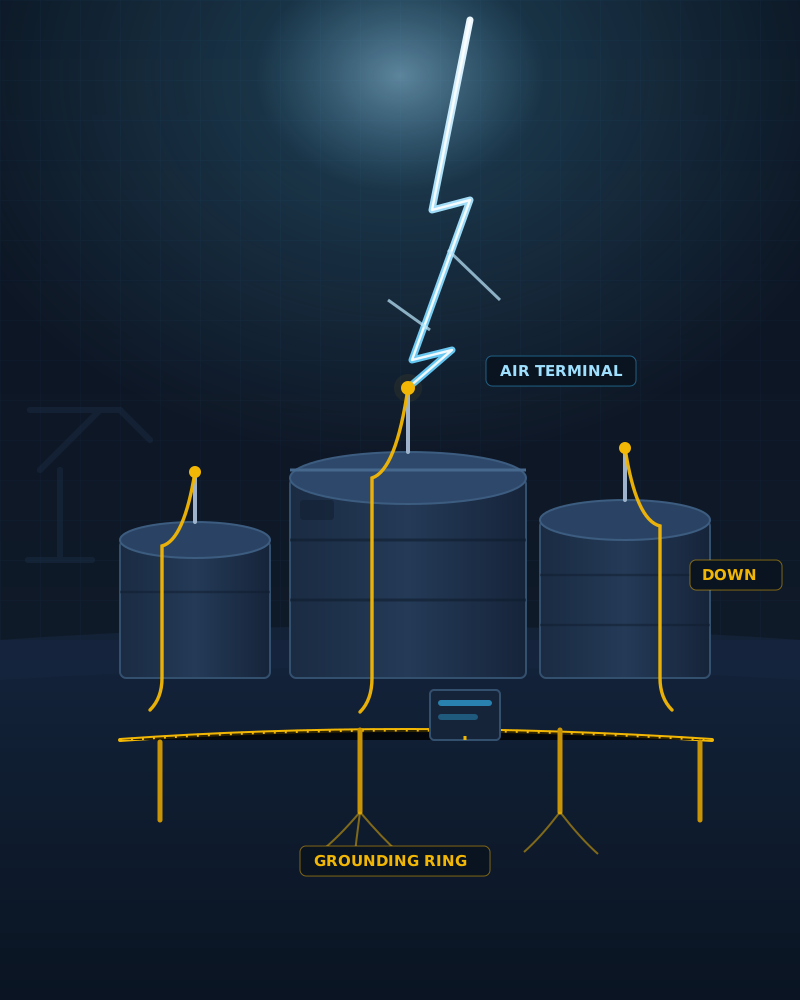
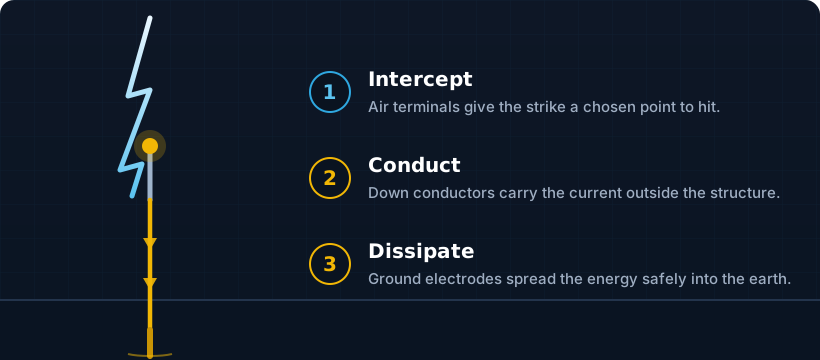
Bonded end to end, grounded hard.
On a lease, bonding is everything. A strike finds the difference in potential between two pieces of steel and jumps it — that arc is the ignition source. We bond every tank, catwalk, separator, and metal structure into one system, tie it to a grounding ring with driven electrodes, and protect the controls and automation from the surge so the whole site rides through the hit.
- Tank-top air terminals placed for full coverage
- Bonding jumpers across tanks, stairs & vessels
- Buried grounding ring with driven ground rods
- Conductors and clamps rated for the environment
- Surge protection for SCADA, RTUs & motor controls
- Coordinated with your existing lease electrical
Where SCI gets the call.
From tank batteries at first light to a rig that needs power before tomorrow’s tour — this is the South Texas oilfield, and it’s where we do our best work.


What we protect in the patch.
If it's tall, metal, full of hydrocarbons, or running the site, it needs to be in the system. We work across the South Texas oil patch — new lease build-outs and retrofits on producing sites alike.
Tank batteries
The classic target — tall steel and vapor on open ground. Terminals on the tanks and full bonding keep a strike from arcing into the stock.
Separators & vessels
Process equipment tied into the same bonded ground so there's no potential difference for a strike to jump across.
Light plants & lease lighting
Tall, isolated, and often the high point on a dark pad — grounded and bonded so they take a hit safely.
Controls, SCADA & automation
RTUs, flow computers, and motor controls are surge-sensitive and expensive. We protect the electronics that keep the lease reporting and running.
Pump & motor controls
VFDs and starters don't survive a surge well. Coordinated protection keeps your pumps online after the storm.
New lease build-outs
Designing the pad fresh? We build lightning protection and grounding in from the start, not bolted on after the first scare.
What people ask us.
Why is lightning such a big deal on a tank battery specifically?
Two reasons stacked together: the tanks are the tallest steel for a long way on flat, open ground, so they're a natural strike point — and they hold and vent flammable vapor. If a strike arcs to an unbonded tank or jumps between two pieces of steel at different potential, that arc near a vapor space is an ignition source. Bonding everything together and grounding it hard removes the arc and the path that starts the fire.
What does 'bonding' actually mean out here?
Bonding means electrically connecting all the metal — every tank, catwalk, stair, separator, and vessel — so there's no voltage difference between any two pieces during a strike. Lightning damage on a lease usually comes from that difference: the current jumps the gap and arcs. Bond it all to a common ground and there's no gap to jump.
Can you add protection to a producing lease without shutting it down?
In most cases, yes. A lot of the work — setting terminals, running conductors, driving ground rods, adding bonding jumpers — happens on the structures and around the pad without interrupting production. Anything that does need a controls or power interruption we schedule with you. Tell us the site and we'll plan it around your operation.
Do you handle the controls and SCADA side too?
Yes. The direct-strike protection and the surge protection on your automation are two halves of the same job, and we do both. A bonded, grounded site protects the structure; coordinated surge protection on RTUs, flow computers, and motor controls protects the electronics that keep the lease reporting and pumping. We tie it together so one strike doesn't take out your production data and your equipment at the same time.
Lightning already hit one of our sites. Can you help now?
Call the 24-hour line at (979) 616-1608. We respond to strike damage — burned panels, dead controls, tripped or destroyed motor starters — get you back online, and then build the protection so the next storm doesn't repeat it. Oilfield emergency response is part of what we do.
Do you build this into new lease construction?
That's the best time to do it. On a new build-out we lay the grounding ring and bonding in with the rest of the lease electrical and set the terminals as the equipment goes in — cleaner, cheaper, and fully integrated instead of retrofitted after the first close call.