
Most people picture lightning damage as a dramatic strike that splits a tree or sets a roof on fire. That happens — but it's rare. The damage that actually shows up on South Texas claims, season after season, is quieter and far more common: the surge.
The surge is the real threat
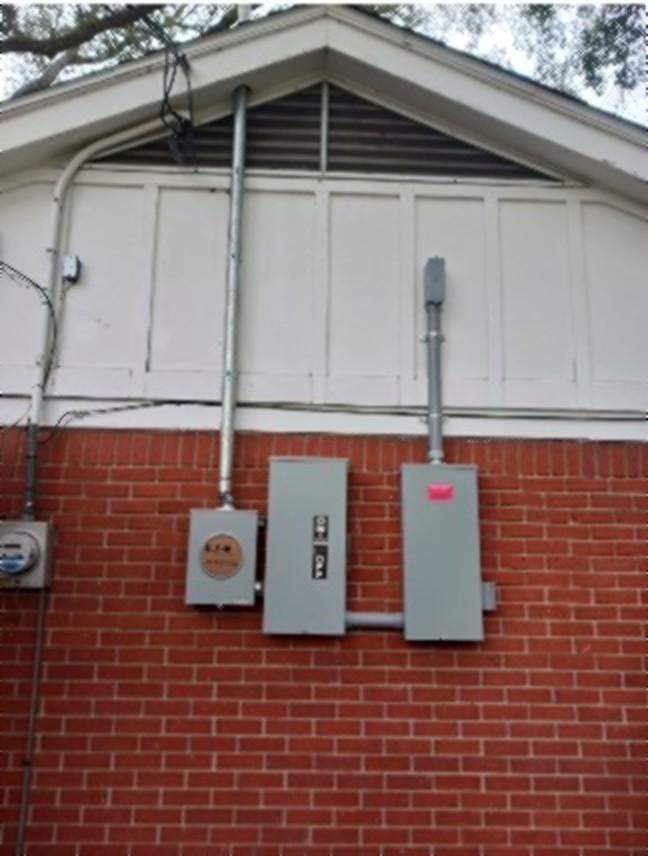
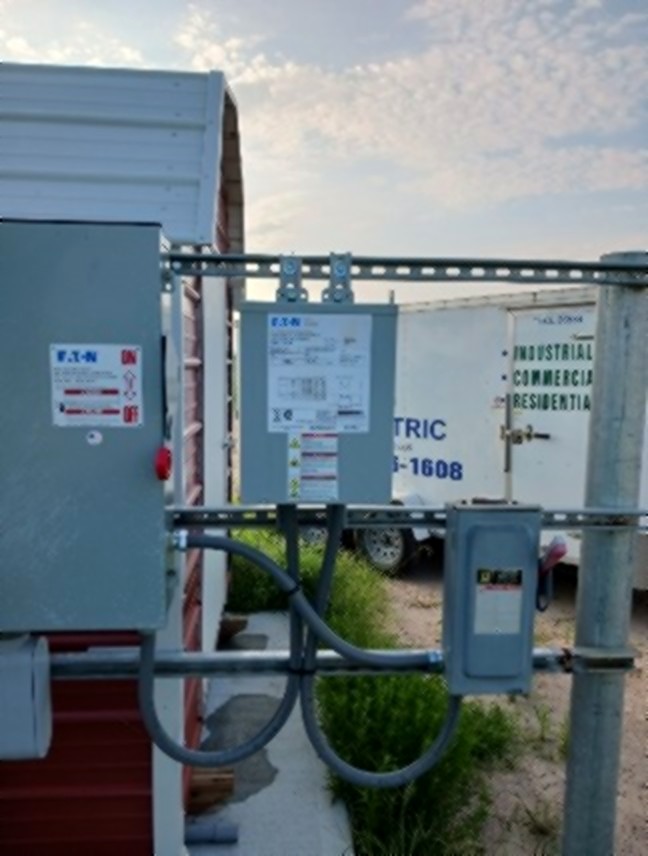
When lightning strikes near your home or business — not even a direct hit, just close — it pushes a massive voltage spike down the power lines. That spike travels into your panel and out to everything plugged in: the AC compressor, the well pump, the refrigerator, the TV, every charger and smart device in the building. It can take all of it out in a single instant, and a homeowner's first clue is often a house full of dead electronics after a storm passed a mile away.
Two layers, two different jobs
Real protection works in two layers. Surge protection at the panel guards against the spike on the wires — it's the affordable, high-value layer that addresses the most common damage, and on its own it's worth doing for almost any property. A lightning protection system — air terminals, down conductors, and grounding — handles a direct strike to the structure itself, giving it a safe path to earth. Surge protection does nothing for a direct hit; a lightning system does nothing for the spike on the wires. For full coverage you want both, and we'll tell you honestly which makes sense for your building.
Who needs the full system
Not every house needs air terminals on the roof. But some properties are far more exposed than others. Rural and ranch homes on open ground are often the tallest thing around. Metal-roof buildings need proper bonding, not a false sense of security. Homes with wells and pumps have surge-magnet equipment. And any business that stops when the power stops — a shop with refrigeration, an office full of servers, a grain operation mid-harvest — has real money riding on staying up through a storm.
Does it help with insurance?
Often, yes. Many carriers offer credits for a documented, code-compliant system, especially on rural property and commercial sites where a strike-caused fire is a genuine risk. We build to the national standards (NFPA 780 and UL 96A) and provide the documentation your agent will ask for. Worth a quick call to your carrier to see what your policy allows.
What it doesn't have to be
Lightning protection has an old-fashioned reputation — tall ugly rods bristling off a roofline. Modern air terminals are small, low, and routed to stay out of sight; from the street, most people never notice them. The goal is protection you forget about until the day it earns its keep.
If you're not sure whether your home or business needs surge protection, a full system, or just a second opinion, we're glad to take a look. Home lightning protection → · Business lightning protection →